Water Extraction in West Yarmouth, MA
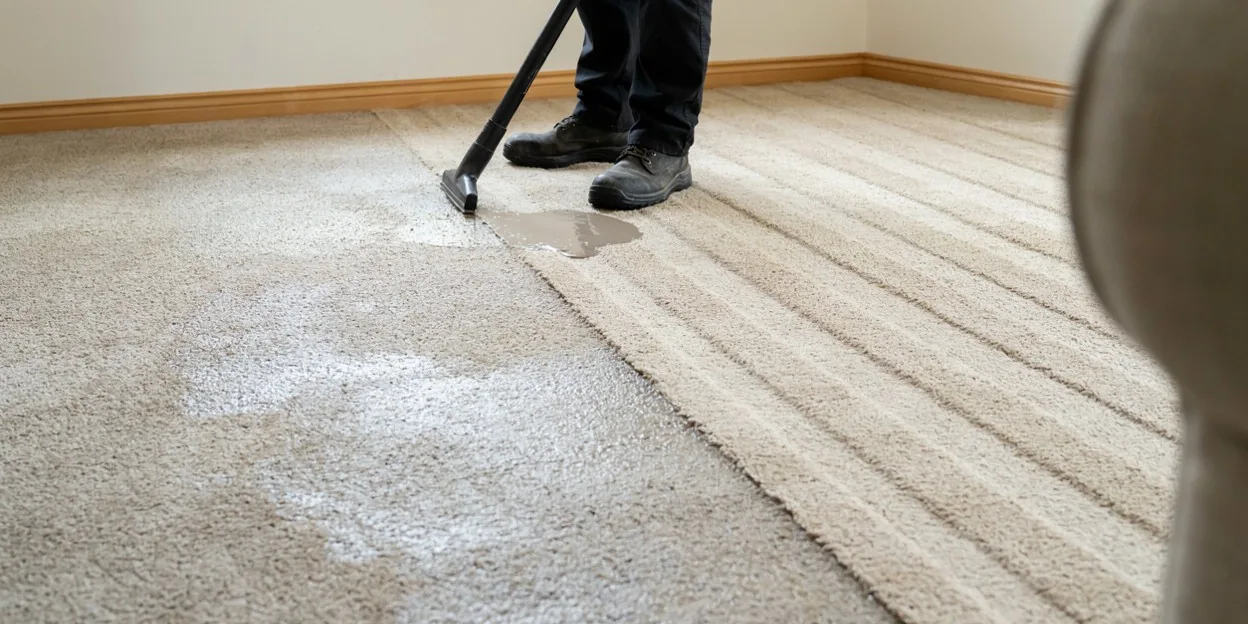
The washing machine hose let go while you were at the beach, and the hallway of your West Yarmouth ranch is under an inch of water. It has already reached the bedroom carpet and is heading for the slider. We put you on the phone with an independent local provider who does water extraction in Yarmouth and across Barnstable County.
What the crew does first
The crew that comes out makes sure the water is stopped. If it is not, they show you the valve. Then they pump or vacuum the standing water off the floor with truck-mounted or portable extraction units. A shop vac from the garage leaves a lot behind. Extraction gear pulls water up out of carpet pad, grout lines, and the seams between pine boards.
Once the bulk water is gone, they walk the rooms with a moisture meter. Water travels under baseboards and into the next room before you see it, and on a slab it has nowhere to drain, so it spreads flat across the whole house. The readings show where it went. That map decides where drying equipment goes and which materials get pulled.
What to do in the next hour
Shut the water off if you can reach the valve safely. In most Yarmouth homes it is where the line comes in from the street, near the water heater or inside the crawl space hatch. On a well, flip the pump breaker. Do not step into water that has reached an outlet, a power strip, or the furnace.
Move what you can lift out of the wet area. Put foil or plastic under furniture legs you cannot move. Take photos with your phone before anything is moved or pulled up. Then make the call.
What is usually saved and what is not
Tile and sealed concrete usually clean up fine once the water is out. Solid pine and oak floors can often be dried if extraction starts soon, though some cupping is possible. Carpet can sometimes be saved. The pad under it almost never is.
Laminate flooring, particleboard cabinet bases, and wet drywall below the water line usually come out. Ask the crew what reading supports each removal. Extraction is only the first step. Structural drying with air movers and dehumidifiers is what brings the walls and floor back to normal, and in a house with a crawl space that includes pumping out the space underneath.
Barnstable County notes
Much of the housing between Hyannis and Dennis went up between 1950 and 1975, and a lot of it sits on a slab poured on sand. Water on a slab wicks straight into the bottom of the drywall and the toe kicks of the kitchen cabinets. Cottages and older Capes sit on crawl spaces instead, and water that goes through the floor lands in sand a few feet above the water table, where it stays.
Salt air is the other Cape problem. Indoor humidity here runs high most of the year, so a wet room gets little help from an open window. That is why the crew brings dehumidifiers even for a small loss.
Along Route 28 in West Yarmouth and Dennis Port, many of the calls come from motel and condominium units. Tell the crew if the water came from a neighboring unit or a shared line, and notify the association in writing the same day. If the water came from outside, from the bay or the street, it is handled as flood cleanup instead.
Many policies cover sudden water damage from a burst line or a failed hose. Gradual leaks often are not covered. Ask the crew to document moisture readings and photos so you have them for your adjuster.
Calling about water extraction
Say roughly when the water started and which rooms are wet. Say whether the water is still running, whether it came from a supply line or from outside, and whether the house is on a slab, a crawl space, or a basement. Say if there is standing water right now. Call (508) 419-9161 now and tell us what you see.